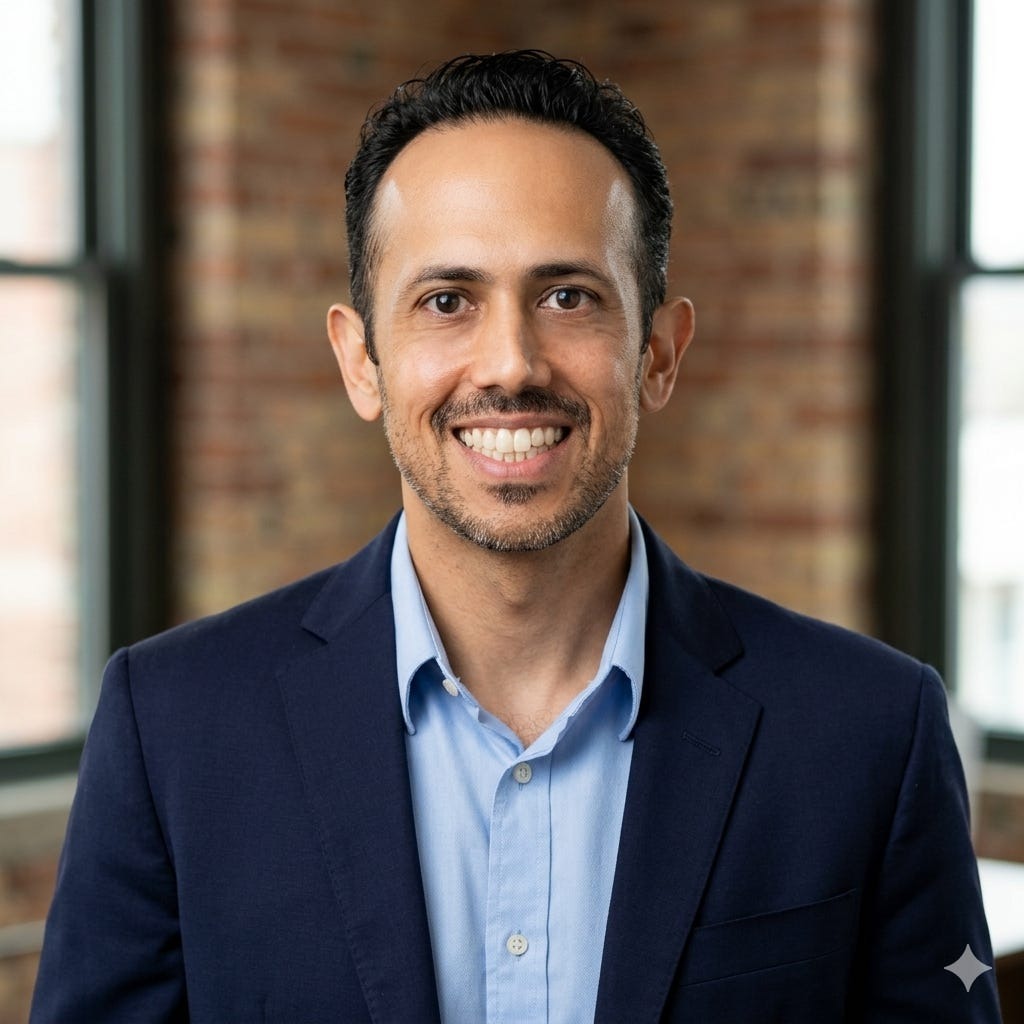
A conversation with Dr. Hirsh Trivedi on why two patients with identical labs shouldn't always be treated the same, why GLP-1s may be a lifelong commitment, and the case that taught him how narrow the window for reversing fatty liver really is.
The Conversation
To start, could you introduce yourself and tell us about the work you do day to day?
Of course. I'm a hepatologist and the director of the metabolic liver disease program at Dell Medical School at the University of Texas in Austin. I've trained in internal medicine, gastroenterology, transplant hepatology and liver transplant, as well as obesity medicine, so I practice a little bit of all four of these specialties within my daily clinical practice. I also do clinical research, mostly in the space of metabolic liver disease, which was previously called fatty liver. And being South Asian myself, I've been very interested in how metabolic conditions cluster in families, especially across different generations. I do a lot of writing and work related to that, and I have a book that I'm working on currently that I look forward to speaking about as well.
If two patients have the same weight and the same labs, but one has a strong family history of cirrhosis, diabetes and early heart disease, do you treat them differently or the same way?
I treat them differently, and not just based on their family history, but also on their ethnic and racial background. When it comes to metabolic conditions in general, and especially as they relate to the liver, we know they disproportionately affect certain ethnicities and cultures. South Asian or Hispanic individuals, for example, have a higher prevalence of metabolic liver disease, and they have worse scarring and related complications. Family history is very important because it gives me a glimpse of that individual's specific risk factors. If I'm seeing someone next door in the clinic who doesn't have those same family risk factors and doesn't have a high-risk ethnicity, then yes, I would be risk-triaging them very differently.
The assumption has largely been that we treat all comers the same. National and international guidelines make recommendations to treat everybody a particular way based on their lab values. But when you look at the studies they're referencing, they're very homogeneous and largely taken from European populations. They're not always representative of the global health picture, or of the multicultural populations we have in the US and other countries.
Would you start medication earlier for the patient with the heavier family history?
It depends on the condition we're looking at. If a patient has a family history of diabetes, then I would be looking for diabetes in that patient first, and I would look for it earlier than standard guidelines might recommend. The way I look for it is also a bit more focused. I wouldn't just look at the hemoglobin A1C, which is a marker of what your blood sugar has been over the past three months. I would look at the fasting insulin level, and I would calculate something called the HOMA-IR, a calculation from fasting insulin and fasting glucose that tells me whether they have evolving insulin resistance even if they haven't met the threshold for pre-diabetes or diabetes on the hemoglobin A1C.
So in a patient with a family history of type 2 diabetes, who may have heart disease in the family and the whole myriad of metabolic dysfunction, I would do more targeted diagnosis to make sure they're not developing insulin resistance. And if I find that they are, even without full-blown diabetes, I would aggressively try to modify their risk factors. A lot of the time that's through diet and exercise, and making sure they're informed of what their future risk is. And yes, sometimes that means starting medications earlier. If you look earlier, you might find earlier, and you might implement treatment earlier as a result.
How much can a genetic marker like PNPLA3 tell us about who will respond to a GLP-1, or to lifestyle change? How is genetic testing changing the way doctors choose treatment?
That's a very smart question, and it tells us we're heading into the field of precision medicine, where we can hopefully one day check lab panels and genetic panels to see an individual patient's risk of disease and then apply treatments specific to that risk. That is the goal, and that is where we should be heading, but we're not there yet.
The PNPLA3 gene you mentioned is associated with more risk of liver disease, including not only metabolic but also alcohol-related liver disease, and with related fibrosis and scarring. That we know about, but we don't yet have a drug that specifically targets that genotype. The drugs that are available for metabolic liver disease, resmetirom and the GLP-1s, help with the overall metabolic phenotype or act directly within the liver cells, but they don't alter that gene specifically. We don't have gene editing or gene-targeted therapies in metabolic liver disease yet. Hopefully we will.
In the families you've seen, what drives disease more: inherited biology or environment? How does that change what you tell patients about reducing their risk?
It's a combination of both, and that's the point I try to make in my book, Inherited Risk. Take an unstable environment with a lot of ultra-processed foods and a lot of sedentary living, people sitting at desk jobs through the day. Put all of those risk factors onto someone with a genetic predisposition to metabolic dysfunction, and that's a recipe for disaster. Add the same environmental signals to someone without that predisposition, and it may take them a lot longer to develop metabolic dysfunction, or they may never develop it.
An example is South Asians, or Asians in general. We tend to have metabolic dysfunction even at normal body weights. We can have fatty liver and not even know it. A European or Caucasian counterpart might have a BMI of 50 and you look at their liver and there's no fatty liver at all. We're exposed to the same environment, the same foods, the same sedentary culture, so why does one person develop fatty liver and metabolic dysfunction and the other doesn't? That's the genetic risk, the inherited risk we're born into this world with.
Having said that, the risk accelerates with each subsequent generation. My parents might have developed heart disease or diabetes at 50 or 60. In my generation, if I don't take care of myself, I'll develop it at 30 or 40, and in my kids' generation, even earlier. We're already seeing it: rates of pediatric obesity and pediatric fatty liver disease are skyrocketing. It's scary, but I do think there are ways we can tackle this.
When a patient on a GLP-1 reaches their goal, do you keep them on a lower maintenance dose, or do you stop?
I try to tell my patients that we will keep you on this for as long as possible. When you discontinue a GLP-1, many patients who lost a lot of weight on the medication regain it. The studies show that after about a year, even their metabolic conditions, like diabetes and high blood pressure, start to come back. So, similar to cholesterol or blood pressure medications, we tell patients we're probably going to keep them on it lifelong, because once you stop, you might regain much of that weight and the associated metabolic conditions, sometimes even worse than before. That's why I'm very careful about starting a GLP-1, but when I do start it, I tell my patients we cannot discontinue it.
What you can do, once you've reached a good dose and a good amount of weight loss, is reduce to a maintenance dose rather than discontinuing. That way you're not continuing to have unnecessary weight loss, but you're keeping them on the medication lifelong so they maintain some level of weight loss and metabolic control without regaining weight or seeing their metabolic conditions return.
What happens when a patient can't stay on a GLP-1, for example because of pregnancy or cost? Is there an alternative that works as well?
This is the problem we have all over the world right now: access is limited. Only about 20% of patients who start on a GLP-1 stay on it, because most of the time their insurance stops covering it or they're no longer able to afford it. So, number one, I don't start my patients on a GLP-1 unless I'm convinced they'll be able to stay on it long term.
There are scenarios where it's fine to stop temporarily. If someone wants to get pregnant, it's okay to stop, get through the pregnancy safely, and then consider restarting afterwards. That's completely safe. But if someone can no longer afford it after a year or two, we don't have the right system to help those patients, unfortunately. Right now, the people who have access to GLP-1 medications are really only the people with resources and funds. In the US we're coming up with new programs that help more patients gain access, but we still have a long way to go, and I think the same is true in the UK and elsewhere.
There's no other good alternative. There are other weight loss medicines, and some people use metformin or orlistat, but they haven't historically been as effective as GLP-1s, where we're talking about 20% plus weight loss. Medications like phentermine haven't shown as much benefit. So although the medicine is there, we have a lot of work to do to improve access, because the people who need it the most are often the people who don't have it.
For metabolic liver disease specifically, how do you choose between treatments if a patient doesn't have access to a GLP-1?
In metabolic liver disease we only have two approved treatments right now. Metformin is good for diabetes and for some degree of weight loss, but it isn't a treatment for metabolic liver disease. The two medicines we do have are resmetirom and semaglutide, which is the GLP-1.
First of all, patients need to have stage two to three fibrosis, because that's the approved indication. If they have no fibrosis, or if they have cirrhosis, they're not a candidate for either medicine. If they do have stage two to three scarring, then I look at their metabolic phenotype. Resmetirom is a liver-directed treatment that targets the thyroid hormone receptor in the liver. Semaglutide is a GLP-1 with systemic effects. If I think the patient's diabetes or systemic metabolic dysfunction is driving their liver disease, I start with semaglutide, because I know it will treat the liver while also acting on everything else. If a patient has fatty liver but no other metabolic dysfunction yet, I use resmetirom first.
Ultimately, I think combination treatment is the way forward. Once you have someone on one medication and you monitor them over a year or two, if they're still at stage two to three fibrosis, you add the second one. That's the algorithm we use.
Does having liver fibrosis mean a patient will also develop other metabolic diseases, or can it occur without them?
This is why the overall genetic and inherited risk matters. We have patients who aren't obese, who have a normal BMI, and we call it lean fatty liver disease. They get fatty liver, but they have no diabetes and no heart disease by the standard diagnostic criteria. They're completely without metabolic dysfunction, yet they still have fatty liver disease and scarring from it. Those patients do exist, and they can go on to get scarring of the liver. In them I start with resmetirom, because I want something that directly targets the liver.
More broadly, with fatty liver you have two distinct phenotypes. The liver-predominant phenotype gets fatty liver, then scarring, and goes on to develop all of the liver-related complications. The cardiometabolic-dominant phenotype gets fatty liver, but their scarring doesn't necessarily get worse. They're at higher risk of heart disease, stroke and diabetes, and their metabolic syndrome worsens alongside the fatty liver. When I'm seeing a patient, I try to determine two things: what stage of fibrosis they're at, and which phenotype I'm dealing with. That helps inform the next steps.
After a liver transplant, immunosuppressants like tacrolimus and steroids can worsen diabetes and blood pressure. How do you balance treating the graft against treating those complications?
It's a challenging question, because immunosuppressive medicines are very important in anyone with a transplant, whether liver, kidney or any other organ, to prevent rejection of the new organ. The most common ones we use in liver transplant are tacrolimus and mycophenolate. Tacrolimus and some of the others can worsen insulin resistance and increase the risk of heart disease. So we want to give the patient enough immunosuppression that they're not rejecting their new organ, but not so much that we make all of these other metabolic complications worse.
That's why we monitor patients very closely after transplant. The biggest risk of rejection is early, especially in the first year. As the years go by and we're able to prevent rejection, we can slowly wean the immunosuppression to lower levels, so they have fewer complications from the medication while still maintaining their organ health.
Your book is about inherited risk. Should obesity and fatty liver be treated as chronic diseases, like hypertension and heart disease, or can they disappear?
They should be treated like chronic diseases. They are chronic diseases, but they can also go away, just like hypertension and type 2 diabetes can get better. We should still treat them as chronic because even if I have an obese patient who is now non-obese, they remain at risk of obesity again in the future if we don't continue treatment, whether that's lifestyle medicine or medication. So we should be treating obesity, fatty liver disease and type 2 diabetes all as chronic conditions.
How much do you use AI in your own practice?
I use AI almost daily in my clinical practice, mostly for transcribing. I try to spend as much time face to face with my patient as I can, so I have to minimize my time with the computer. A lot of my note-taking and documentation goes through AI transcription software, so I can auto-populate my note based on my conversation with the patient or on the chart review I did before going into the room.
I do sometimes use it for clinical decision-making, maybe once a week or once every couple of weeks. I'll describe a patient's case presentation, what I'm considering, and ask what else I might be missing. I do that with difficult, challenging cases, just to make sure I'm not overlooking something. These are all HIPAA-compliant tools, and most of my colleagues use the same software. Now newer models are being developed in Epic and other medical record systems that allow AI to be built into clinical decision-making tools.
How far do you trust the clinical judgment of an AI tool?
I never trust it solely. I use it to add to my plan and to enhance my plan. I never use it to replace my plan or my thinking. I always do all of my thinking up front on my own, I come up with my plans and next steps myself, and then I ask what else I'm missing. I've found it to be wrong sometimes, so I'm very careful with how I use it. I think it's getting better overall, and its accuracy has improved even since a year ago. But I still like the practice of the diagnostic challenge, thinking through the problem and solving the puzzle. I really enjoy that part of medicine, so I'm hesitant to give it all away to AI, for multiple reasons.
Some professors worry that students are leaning on AI at every step of their training. Is AI helping or hurting medical education and critical thinking?
I think AI can be a blessing or a curse. If you apply your own critical thinking to a challenging case first and then use AI to supplement it, I think that's additive. You learn something too: what did I miss, and why did I miss it? You'll use that the next time a similar case comes up. But if you just use it to think for you, that is very dangerous.
I can imagine a lot of students doing this. We write research, and sometimes I can tell that a trainee, whether a student, resident or fellow, used AI to write the whole manuscript. I go back and tell them so, and I make them revise it, or I take the project away. We still need to do the critical thinking ourselves, whether it's diagnosing a patient, coming up with a management plan, or doing our own research. We need to come up with our own hypothesis, study against it, do our own analysis and write our own manuscript. After that, if you want additional input, you can use AI, but the work at the beginning still needs to be done.
When you're building a fellowship program, what are you looking for in trainees?
I want to see drive. I want to see that trainees have some inner drive within them, and you can only get so much of that from a brief glimpse of a resume. In my opinion, the interview tells you a lot more. But one thing I look for on a resume is whether this person has done their own research, clinical or otherwise, in their field. That tells me they probably had enough self-initiative to come up with a research question, conduct the research, execute on it and get it published. They went from beginning to end. Even one publication like that, as first author for example, tells me this person is motivated and self-driven. That's the type of person you can teach the field to. They're very receptive to learning, and they pick things up a little quicker than others.
Can you share a case that has stayed with you, and what you'd want residents to take from it?
Recently I had a patient with a BMI above 55, near 60, who was only in his fifties. In the previous six months he'd had four or five hospitalizations for hepatic encephalopathy, which is a complication of cirrhosis. By the time I saw him for the first time in clinic, his liver disease was already so advanced that I knew the only thing that could help him was weight loss, but there was really no way to achieve it. The bariatric surgeons didn't want to touch him because of his decompensated cirrhosis. I talked to an advanced endoscopist about an endoscopic sleeve gastroplasty, but he was too high risk because of the decompensated cirrhosis and a BMI near 60.
The only option left was something like a GLP-1, and even that is risky, because GLP-1s are not approved in decompensated cirrhosis and can actually be toxic in that setting. So I had a one-on-one discussion with him to make sure he understood the risks and the benefits, and he chose to go ahead. He wasn't able to lose weight, and he passed away not too long ago from complications of decompensated cirrhosis.
The point of the case is that fatty liver can get so bad that there's no turning back. We have to do a better job, as students, trainees and clinicians, of catching these patients earlier, while their disease is still reversible and it's not too late. This condition continues to go in the wrong direction, and we need to do more to capture it in the window where we can actually make a difference. That's why I talk so much about what I talk about: so we can be more aware, and figure this condition out earlier.